
Activated Carbon Composite Filter Media helps in controlling Airborne Toxic Pollutants: Is That True?
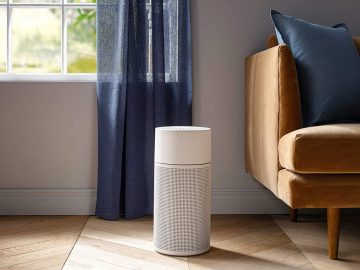
In today’s world, dealing with environmental pollution has become the need of the hour. Environmental pollution, be it land, water, or air, caused by toxic elements is creating havoc to the environment. This not only is creating destruction to biodiversity but also immensely hampering human health. With increasing pollution levels increasing day-by-day, we need better technological advancements to cater to the prevailing issue of giving respite from toxic and non-toxic air pollutants. There are many sources and methods of filtration, such as nanotechnology and melt-blown nonwoven fabric filtration, carbon filtering methods, such as activated carbon filter media in melt-blown technology, and many more. Park Nonwoven has recently launched its one of a kind activated Carbon meltblown filter media known as ‘CarboMelt’. Filtration with these methods offers many advantages to improve existing environmental technologies and create new technologies that are always better than the current technology. Three main capabilities that can be applied in this field of environmental cleansing is: clean-up [remediation], purification, and detection of contaminants [sensing and detection]. What does an activated carbon filter remove? Activated carbon filter media has special properties that remove volatile organic compounds, odours, gaseous pollutants from the air. In addition to it, when it is a composite filter media with melt-blown i.e., Activated Carbon composite with melt-blown nonwoven fabric filter media, it effectively removes formaldehyde, absorbs small particles in the air, and has anti-bacterial properties. The application areas also increase of such an activated carbon filter media such as – medicine, health, household, and defense industry. This works in a way that is different from other air purifiers such as HEPA which only filters out particle pollution from the air. Activated Carbon filter media traps the gas molecules on a bed of charcoal, a process that is surprisingly unique and latest. Let us see the list of elements that Activated Carbon Filter Media composite removes: What are activated carbon filters used for? Activated Carbon Filters have various applications. In a nutshell, it is used for liquid purification, water purification, air and gas purification, besides other industry applications. Let us find its applications at length: Is Activated Carbon Filter safe? By virtue of its legacy, Activated Carbon filters are a safest and most efficient way of filtration of water and air pollutants and odours; however, there are independent health certifications of each filtration system that defines and validates its safety and purity standards. To enhance consumer confidence and ensuring your family confidence highest level of drinking water and air purification standards must be checked from approved bodies. Having said that, an activated carbon filter is good if its filter replacement and maintenance program is of optimal quality as per quality standards and maintains an ongoing high level of performance. What is an activated carbon filter made of? Activated Carbon is carbon that is treated with some additional processing making it better at trapping gas molecules. Primarily, it is prepared by injecting with hot air, carbon dioxide, the steam that create a lattice of tiny pores in the carbon, increasing its surface area. This mechanism is extremely well to create more places for molecules and become trapped making carbon far more effective as a filter medium. A single gram of activated carbon can have hundreds of square meters of internal surface area. Most activated carbon is also treated with a chemical that enhances its ability to filter specific pollutants. Activated Carbon Filters are a unique addition to any air or water purification system. They can be used as a basic or advanced model and one can breathe easily using an activated carbon filter, hence can be used as Meltblown Activated Carbon filter media for masks. Park Nonwoven is one of the major manufacturers and suppliers of Activated Carbon Meltblown Filter Media, commonly known as CarboMELTTMas there newly launched product line.
What is PP Meltblown Nonwoven Fabric? Overview, Procedure, Applications, Products and more
What is Meltblown Fabric? Polypropylene or PP Meltblown Nonwoven Fabric is made up of Polypropylene and its fiber diameter can be 1 to 5 microns with excellent oil absorption, heat insulation, filtration, and shielding capacity and properties. You get various anti-wrinkle fluffy structures and voids for PP Meltblown nonwoven fabric. Owing to its filtration properties and distinct capillary structures of the ultra-fine fibers it has applications in various filtration industries such as – air filters, face masks, N95 Face masks, water, and other industries. Owing to its complex fiber-structure that increases its surface area and the number of fibers per unit area, it imparts exquisite qualities. Uses and Applications of PP Meltblown Nonwoven Fabrics: Meltblown fabrics are mostly used in: Check out our World-renowned Product: Parklite Melt Blown Insulation Typical Production Procedure of PP Meltblown Nonwoven fabrics To produce these technical fabrics, it must undergo several processes: Step 1: Polymer Feeding Step 2: Meltblown Extrusion Step 3: Fiber Formation Step 4: Fiber Cooling Step 5: Forming Net Step 6: Strengthening to form Cloth Various Applications of Meltblown Fabrics: 1. Healthcare Industry – Medical Cloths/ Coverall Uses: Body Coverall, EPP Kits, body Coverall, Surgical gowns, Diapers, Disinfecting Wraps/ wipes/ Napkins and many more 2. Cloth for Home Décor or Interlining Uses: Bedsheets, Tablecloth, Wall Cloth, Interlining and more. 3. Garments – Clothes you Wear Uses: Shaped Cotton, wadding, adhesive lining, shoe liners, leather-based clothing and more. 4. Agriculture Cloths Uses: Irrigation cloth, cloth for raising seedlings, cloth to protect crops, Thermal insulation curtains and more. 5. Fabric for Industrial Uses Uses: Filter Material, Geo Textile, cement packaging bag, insulating material, fabric for covering and more. 6. Other Miscellaneous Purposes Uses: Starting from teabags, cigarette filter, space cotton, thermal insulation cloths, linoleum and more 7. Medical/ N95 Masks Meltblown fabric are known for its being a key element for N95 masks and surgical masks and the market usually have multi-layered structured which is referred to as – SMS structure. Simple meaning of this is S- the first single Layer, M-the middle meltblown layer, S- the outer of the Spunbond fabric layer. PP Meltblown Fabric Filter Media for Masks – The Key element in the Pandemic Times Flat Masks: These masks are usually prepared from three layers PP Spunbond Nonwoven Fabric, PP Meltblown Nonwoven Fabric, and outer layer of another PP Spunbond Nonwoven Fabric. One of the layers can be usually be replaced with some staple fiber for improving skin touch. Three -Dimensional Cup Masks: These masks are made up of PET needle-punched polyester cotton fabric, Meltblown Nonwoven Fabric and PP Spunbond non-woven or needle-punched cotton fabrics. Usually, the outer layer is a nonwoven fabric which undergoes waterproof treatment. The meltblown middle later consists of specially treated Meltblown Nonwoven fabric. It has extraordinary capabilities for oil absorption, shielding, filtering and heat-insulating properties. The inner layer is made up of normal nonwoven fabric. From all the above analysis it is evident that Meltblown Nonwoven Fabric plays a key role in mask production although every mask has its own role to play.
How India Outstandingly Ramped-Up its PPE Kit, Meltblown Nonwoven Fabric Manufacturing, PP Coverall for Fighting COVID 19 Pandemic

Until recently [precisely January-2020], India was nowhere in the picture for PPE Kit Manufacturing or PP Coverall Manufacturing. Only after the declaration of Pandemic that PP Coverall and PPE kits started manufacturing in India. PP Coverall is only a single component of the PPE Kit; however, there were no PP Coveralls with the seam tapes that were manufactured in India. That too, out of 2.75 lakh PPE kits that were with the country in January 2020, were mostly imported from other parts of the world. In few weeks only, India did exceedingly well and ramped up their PPE Kit production so that two lakh kits could have been produced every single day. India had around 16 lakhs approx. in centre-state buffet stock. These efforts from the PP Coverall manufacturers In India and Meltblown nonwoven fabric manufacturer in India made it possible for healthcare workers to have the support the need of the hour and fight against COVID19 and make people recover fast. Top PPE Kits Manufacturing in India: Why India took proactive measures Until now, most of the PP coverall and PPE kits were made in China. And such PPE Kits and PP Coverall are of very poor quality. There had been as escalating anti-Chinese sentiments in the minds of people and healthcare workers globally as PP Coverall fabric manufacturing and Meltblown Fabric Manufacturing is a critical part for optimum safety of the frontline healthcare workers. What is a PPE Kit made of? PPE kit is an essential part of the daily life of healthcare workers especially in times like this. Primarily, a PPE Kits consists of PP Body Coverall made up of Microporous fabric that is composed of Nonwoven Fabric laminated with a Micro-porous film, N95 masks, Surgical masks, head covers, face shields, gowns, shoe covers to provide such healthcare professionals the most comprehensive protection against coronavirus. What is the use of PPE Kits/ PP Body Coverall? The primary goal of the PPE Kits is to attain best, comprehensive, and robust protection for the mouth, nose, eye, body from infected droplets that may carry infectious coronavirus and or other bacterial or viral microbes. The best quality PP Body Coverall protects the skin from the virus completely and impart higher resistance property. The PP Kits/ PP Body Coverall should be impermeable to various kinds of body fluids, including mucus, salivary droplets, phlegm, blood, etc. It must be such that the form and fit should be always maintained. For this reason, the fabric media which is Meltblown nonwoven fabric manufacturer must be highly recognized and provide best in class and high-quality microporous nonwoven. Park nonwoven is highly recognized in the industry for manufacturing supreme quality Microporous Nonwoven fabric laminated with a microporous film. The microporous size is larger than the water droplets and smaller to moisture vapour to hold the liquid and blood penetration. INTERESTING FACTS ABOUT PPE KITS/ PP BODY COVERALL What are the certifications required for PPE KITS? RECOGNIZED CERTIFICATIONS FOR PP COVERALL MANUFACTURERS/ PPE KITS/ MELTBLOWN, SPUNBOND FABRIC MANUFACTURERS: By May 2020, India had many laboratories [9 precisely] that were empowered with the Synthetic Blood Penetration Resistance Test facilities which are essentials to produce the PPE Kits. These labs were needed to attain certain necessary approvals to carry out the tests as well as PPE kits required to fight COVID-19. These labs include: Park Nonwoven is certified by all the above bodies and is acclaimed globally for its high-quality products.
BEST-IN-CLASS SILICA BLANKET, FIBERGLASS NEEDLED MAT/ PP GLASS FIBER FELT – WHY PARK NONWOVEN IS THE TOP INDUSTRIAL MANUFACTURER AND SUPPLIER?
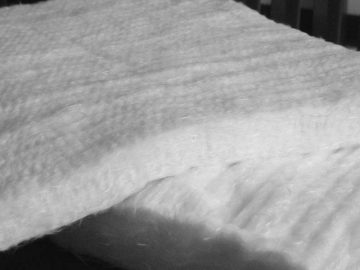
High Silica fiberglass is developed as a high-temperature type product based on material with more than 90% of Silica component. Silica mat/ Silica blanket has a good effect on sound absorption and heat insulation. Glass fiber yarn Is used as raw material and cut into a fixed length, after card and layer and later sent into the needled loom and then punched not mat. This is how fiberglass needled mat is prepared. Some of the outstanding properties are Silica fiberglass material with low thermal conductivity and excellent resistance to high-temperature insulators. They can be used over long durations without even losing the properties without melting or vaporising temperatures hence have a high-temperature range of 1000 ºC and sometimes 1300 ºC for shorter durations. What is Polypropylene Fiber? Polypropylene fiber commonly known as PP is a synthetic fiber, a by-product of Petroleum, transformed from 85% propylene and used in a variety of applications. The fiber is thermoplastic resilient, lightweight, and resistant to mildew and many chemicals. It is essentially a biologically inert and considered non-toxic. Is Fiberglass Needle Mat non-combustible? Does Fiberglass Needle Mat have good sound absorption? Fiberglass needle mat is constructed of continuous fiberglass yarns or chopped strands and strewn in continuous thousands of needles. There is no knitted material used to bond together neither any binder to bind the mat together. It is a kind of inorganic non-woven fiberglass needle mat that has excellent acoustic [noise] elimination and heat insulation. Relative to the woven filter material, it has twice as fast and up to 99.9% dust filtration efficiency. The working temperature of fiberglass needle mats/ high silica fiberglass can be up to 800 °C for a short duration and continuously working at 550°C. High silica needle mats are suitable for continuous use at temperatures up to 2012 °F (1100 °C). PARK Nonwoven is one of the top PP Fiberglass Mat Manufacturers in the industry and the products manufactured are widely used as thermal and acoustic insulation material for electrical equipment, air conditioners, industrial boiler, muffler, exhaust pipe, and many more areas. What are the Top Qualities of Fiberglass Needled Mat or PP Glass Fiber Felt? The special qualities of PP Fiberglass Mat from PARK Nonwoven are as follows: What are the applications of DV 500 Silica Mat? DV 500 Silica Mat or Silica Blanket is high silica fiberglass, has a very high heat an acoustic insulation feature. Find the list of various applications that DV Silica Mat has varied Industries below: Typical Properties of DV 500 Silica Mat Here are some of the typical properties of the DV Silica Blanket/ mat from Park Nonwoven. Park Nonwoven is one of the highly recognized brands and has a legacy of more than 25 years in the industry, serving more than 65 countries globally. To get a customized price quote and product details:
What are Absorbents? The Right kind of PP Oil absorbent for your business
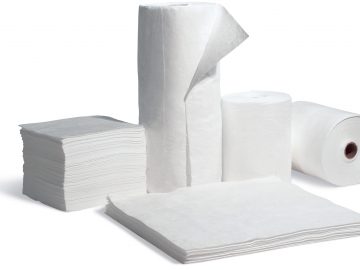
No matter if it is a chemical spill on the factory floor, splashing water in the office or mall hallway, or moisture creeping out of the chemical or packaged goods in the wrong places, it can wreak havoc on a business and handling professionals also. Slip and fall or transit hazards at the wrong time and places can create confusion on workers’ compensation and missed days from work, sometimes oil spillage or chemical spillage could cause much harm to the environment at large, and lead to even worse situations. Oil absorbents and chemical absorbents, and absorbents for oil or chemical spillage hence becomes critical to ensure these hazards can be contained and managed in a timely manner. PARK Nonwoven has more than 25 years of track record in providing the best solutions for both filter media of all sorts such as – nonwoven fabric for filtration through meltblown, spun bond, activated carbon meltblown, and others. PP oil and chemical absorbent material is one of the most popular product-line from PARK Nonwoven, recognized globally. We have expert knowledge of which types of oil absorbents are most effective for which applications in nonwoven fabric line for various industries and applications such as – textiles, automotive, heavy industries, marine, geotextiles, health & hygiene, household, bags, etc. Why Do You Need Oil Absorbents or Chemical Absorbents? There are numerous oil absorbents available across the industry; however, one must be aware of why a particular product is necessary for many businesses. As a business, you need to know the right absorbent that can save the day in many different situations: Oil Spills or Chemical Spillage: Spills are inevitable in certain industries, no matter how good your oil spill containment and prevention procedures are. Quickly containing and cleaning up a spill is critical for employee and customer safety. Oil Spill absorbents are even more critical especially if your workplace works with hazardous chemicals. Oil leaks or Chemical Leaks: Hoses, pipes and valves can break down or wear out and require regular maintenance; however, you still cannot always rule-out all the leaks, so most businesses need a way to deal with leaks when they occur. Packaging: While in transit or storing sometimes it is critical for manufacturers and shippers to control liquid and moisture [sometimes even moisture and some liquid products are hazardous and need liquid absorption if damaged inside the package]. We understand that there are businesses that are likely to encounter one or more of these problems at some point in time and have a plan in place for how to respond. This is where you require PP oil and chemical absorbents fabric from PARK Nonwoven. PARK Non woven manufactures supreme-quality PP oil and chemical absorbents mats/pads for various industries. Check the complete product details here> https://www.parknonwoven.com/pp-oil-and-chemical-absorbent-material/ In order to completely understand which products work best and where and to prepare for the various types of spills you need to know about the various types of absorbents available at length: Absorbents Pads: Laminated oil and chemical absorbents pads are common packaging materials used in numerous industries today. PARK Non woven provide absorbent pads in various specifications and sizes for a variety of applications including Starting from absorbent in the food industry to medical and hygiene, absorbents are highly significant for the smooth running of your operations. Absorbents pads are critical elements in the packaging industry and poultry. It prevents food spillage, juices to meat leaking and unappealing- unsanitary conditions. In the same manner, pharma and medical domains also use absorbent pads to deal with spillage and biohazards spills with the use of PP chemical absorbent pads/ mats. In order to completely understand which products work best and where and to prepare for the various types of spills you need to know about the various types of absorbents available at length: Oil Absorbent Mat: Oil spills can be among the most difficult and hazardous spillage to clean up, so it’s critical to have material to deal with such situations. Spill control material made-up of Polypropylene, commonly known as PP Oil absorbents or PP Chemical Spill absorbent is the most the standard choice for oil clean-up. Absorbents mat rolls are thrown before performing many messy procedures or use to line a workbench for constant oil control in many businesses. Absorbent socks are another primary way to clean-up oils These socks are long polypropylene mesh tubes with a PP filler that’s highly absorbents and resistant to harsh chemicals. Best Oil Absorbent: Which Should You Use? If you need to control spills, leaks, moisture or drainage, or just about any other liquid ingress issue, PARK Non woven has a variety of options to meet your needs. From buying or ordering high-quality PP oil absorbent pads/ mats, you have all the options which will keep your client’s place workplace and products dry, safe, and functioning properly. For any bulk orders, reach out to us over the phone or contact here and get a ready quote.
Buying an HVAC Filter or Dealing in HVAC Filter Media? All you need to know

Needless to say, that central air conditioning and heating is certainly a boon in every household these days, no matter whether you stay in US, UK, Canada, EU, Australia or in Asian countries. Every homeowner considers HVAC air filtration system to be a boon, like all major appliances in the house. Having said that, your HVAC system and filtration system with high-quality filter media is one of the most important aspect of a good quality HVAC filter system. To begin with, let us understand the basic functionality of HVAC air filters. The most basic function is an air filter that removes impurities such as dust, pet dander, pollen, bacteria from the air flowing through the system. It primarily improves the air quality of your home and protects your HVAC filter system from damage. Researches on HVAC filter systems and HVAC filter media: It has been proven that these days homes are better insulated, tightly sealed and energy-efficient. Data suggests that 90 approx. People spend their time indoors. With all that insulation, it can trap indoor pollutants and gases, making indoor air up to 5 times unhealthy than outdoor air. Here is all the detailed information that you need to master all that is included in HVAC air filters: Let us begin at the very beginning and understand the various types of air filters. What are various types of air filters? Air filters are a number of shapes and materials with various capabilities and price points. Let us see some of them in detail here: What is the meaning of all the numbers given? All the air filters are rated for their ability to remove particles from the air, the ratings depend upon the size and effectiveness of the particles that it may restrict or absorb. MERV [Minimum efficiency Reporting Value] is a scale that measures from 1-16 and designates weaker filters with lower numbers and stronger ones with higher values. There are certain brands that own rating system to measure microparticle performance rating. There is another rating method known as CADR or Clean Air Delivery Rate, a scale recognized by the Federal Trade Commission and Env. Protection Agency which measures air purifier efficiency. In MERV the higher the number in terms of particle removal. Most of the filters fall between 12 CADR and 240 CADR range. However, it is intriguing to know that some of the high-performance ones can go up to 1200 CADR. So, it is best when you start by determining the specific needs of the occupants in your home, the quality of filters and ratings of CADR and MERV. Generally, HVAC filters with higher CADR rating are the best choice for families who suffer from allergies and have pets in the home and deal with excessive dust to capture airborne bacteria. Now, once you have figured out the range you are looking for you can factor in the budget. Generally, fiberglass filters are the most affordable once and starting roughly around $9 and save more money over their lifetime.
All You Need to Know about – Filter Bag Media: PPS
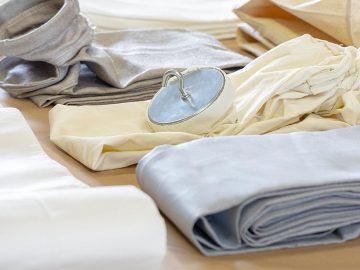
Filter media refers to anything you place in your filter that changes the quality of Air, water or any liquid flowing through it. The primary function of filter media is to hold the engineered soil in place and still prevent small media particles such as plant debris from entering and clogging the drainage layer. There are various kinds of filter fabric to meet your demand such as – nomex(aramid), polyester(pe), pps(polyimide), ptfe, p84, and many more. The widely used and popular Filter Fabrics – dust fabrics are PP Filter Fabric, Polyester Filter Fabric, PPS Filter Fabric, Nomex Filter Fabric, PTFE Filter Fabric, P84 Filter Fabric, Fiberglass Fabric Filter. Significance of Filter Media in Bag Filters Filter Media for bag filters plays an extremely significant role in bag filters. As already known, Bag filters are used for the clarifications of fluids/ air that have a relatively small loading of particles to be removed. The particle suspension passes through and the particles settle in the bag. PPS Fabric: Features & Specifications PPS Filter Fabric made by 100% Ryton fiber which with special trefoiled shape. COX needle PPS fabric cloth made of quality fibers is best suited for filtration of gases mixed with content of sulfur and moisture. PPS Filter fabric is popular filter material that is required to bear the high temperatures. PPS filter fabric and filter bags can bear chemistry naturing inherently and keep fine filtration performance among the awful environment, reaching ideal service filter. PPS (Polyphenylene Sulphide) is a filter bag media that is commonly used in dust collection applications where excellent resistance to acids and alkaline in required. Cement, Chemicals and Carbon black applications are a few industries that frequently utilize PPS filter bags. PPS Filter fabric and filter bags is the ideal filter media which can widely be used in coal boiler, rubbish incinerator, power plants of fly ash filtering of pulse clear dust catcher. The general working temperature of Ryton filter fabric and Ryton filter bags below 190 ℃ under flue gas conditions, and the bag can only resistance temperature below 130 ℃, such as pet (polyester), pp (polypropylene), acrylic, nylon and other chemical filter fabric and filter bag. Needle PPS filter bag fabric cloth mainly used in steel, metallurgy, cement plant, nonferrous metal, bitumen, firepower electricity generation, coke, fireproof materials and other coal powered fields for dust removal. PPS is one of the most important high temparature thermoplastic polymers as it exhibits a number of desirable properties. PARK Non-woven is specialized in nonwoven filter fabrics for liquid-solid filtration and separation. We dedicate to help our customers to meet their requirements of various filter media during production, improve the efficiency and productivity by our innovative and excellent filter fabrics. Get in touch with us for Bulk Orders: sales@parknonwoven.com.
PARK NON-WOVEN FOR AIR FILTER MEDIA WITH SHARP AND STABLE PLEATS
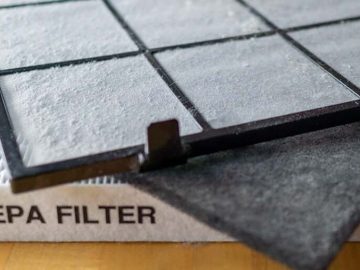
PARK Nonwoven filtration product range offer high-performance nonwoven filter Media fabrics for Air (Industrial), Liquid, EFA (HVAC, HEPA, ULPA) filtration end products for all kinds of industries. They maximize the efficiency of the car interior, indoors and industrial filters. Manufacturers who are taking using PARK Nonwoven filter media are taking particular advantage of the nonwoven’s key and a special set of properties: Superior air permeability combined with excellent stability and stiffness EASY PLEATABLE AIR FILTER MEDIA Filter producers around the globe apply PARK Nonwovens as a filter media material in the manufacture of HEPA and ULPA [HVAC filtration]. And they use the nonwoven fabrics as a layer for particle filter media. It has extremely high dimensional and thermal stability the nonwoven can be easily pleated. It adds stiffness to the filter medium. Pleats created using our medium are sharp and stable. The uniform open structure of thermally bonded endless bi-component filaments/ fibers adds optimal air permeability. PARK NONWOVENS LOW-PRESSURE DROP Due to their high air permeability and pleat stability PARK Nonwovens filter carriers provide a significant reduction in pressure drop. The expected lifetime of the filter element is increased by the low-pressure drop. And it allows the user of the filter to achieve significant energy savings. This makes our clients’ products more cost-effective. If you choose to use PARK NONWOVEN filter media, you can select the right non-woven options from our wide variety of different polymer configurations, weights, variations, colours, etc. And we can tailor the roll width and length to suit your individual process requirements and settings. OUTPERFORM OTHERS, AT AN EDGE WITH AIR FILTER CARRIERS Over the years, filter manufacturers have recognized us as being the best filter media to improve the efficiency of their manufacturing processes. Our nonwoven filter media enhances the performance of their finished filter elements. Let us find a few characteristics that make PARK Nonwoven filter media the best one in the industry: Consistent and trustworthy performance See our Portfolio- Classifications Would you like to discover what PARK Nonwovens can do for your business, get a sample? Give us a call or fill-out your details and we will get back to you!
Is Melt blown the Best Material for a Surgical & N95 Mask?
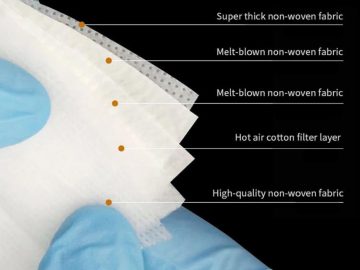
Scientist are testing every day on highly efficient fabrics for best protection from Coronavirus. And with latest studies showing that COVID is air borne as well, face masks and other filtration medium’s efficiency has become even more critical. Authorities are constantly recommending covering faces with fabric during the coronavirus pandemic. But even after one year of research and trials are we sure which material offers the most protection? Starting from everyday items such as pillow covers, flannel pajamas, origami vacuum bags, we have checked all material to make DIY face masks, we have tried it all. While it is known that simple face covering can reduce the spread of coronavirus by blocking outgoing germs from coughs or sneezes of an infected person, experts say we need to go beyond just a covering to combat the aerosol or air borne spread, especially in a closed environment. How is N95/ Surgical Masks different? Simple they are made of Meltblown filter fabric layer along with high-efficiency Spunbond. The best medical masks – known as N95 respirator, filters out at least 95 percent of particles as small as 0.3 microns. By comparison, a typical surgical mask with a melt blown filter fabric media, made using a rectangular piece of pleated material with elastic ear loops gives you a filtration capacity of 60-80 percent. Survey Data of HVAC Filter Researchers tested two types of air filters. One was the allergy reduction HVAC filter worked the best by capturing 89 percent of the particles with one layer and 94 percent with two layers. Then there was a furnace filter captured 75 percent with two layers, however required six layers to achieve 95 percent. In order to find a filter with that tested look for a minimum efficiency reporting value MERV rating of 12 or more or a microparticle performance rating of 1900 or higher is required. Why to opt for multiple layers in a mask apart from high-efficiency? The issue with air filters is that they could shed small fibers that would be risky to inhale. So, if you want a filter, one must sandwich it between two layers of cotton fabric. However, the fabric where common fabrics were used, two layers offers far less protection than multiple layers. A 600 thread count cotton fabric captures only 20-22 percent of protection and when doubled it offers 60 percent of protection. How much normal fabric offer breathability? Of course, these stacks of fabric reduce the breathability drastically of a mask, hence meltblown fabric of high efficiency offer best breathability. PARK OWNED PP FILTER MEDIA FOR RESPIRATOR AND HIGHLIGHTS: PARK owned the most advanced melt-blown line from Europe, and the latest technology assures a steady, stable quality for various mask media, such as surgical face masks, particulate respirators and cartridge filters. Our products conform to the US standard of NIOSH 42CFR84 and FDA 510K, and conform to the European standards of EN149:2001+A1:2009, EN143:2000 and EN14683:2005. MELTBLOWN FILTERATION MEDIA FOR MASKS AND RESPIRATORS SPUN BOND FOR INNER AND OUTER LAYER SURGICAL WEAR FABRIC For bulk order and fast delivery, drop us an email to sales@parknonwoven.com or call us now!
Do HEPA Filters Remove Viruses? PARK Nonwoven HEPA Grades – H10, H11, H12, H13, H14 do

Public health has been a major concern off late, with the second and third waves of the pandemic continues to take a toll on human lives and health. Air quality has become the top priority for homeowners and businesses, besides other places where indoor safety protocols are in place. Consumers advertently turning towards Air purifiers such as HVAC filter with HEPA filter media, ULPA filter media and other personal protection measure and face masks to safeguards themselves against contaminants, especially indoors where many people are expected to sit and work together Now, the question arises – do all purifiers remove the virus and other germs? If not, what specifications are needed in a particular filter media to efficiently remove viruses and other microbes from the indoor air that we breathe? Well, there are many factors that works than me and you might think. Here are some advantages of HEPA filters and HEPA filter media grades that explains why and how it helps in fighting disease from the air that we breathe indoors: Let’s begin at the very beginning: What are HEPA Filters? We all have come across or even changed the HEPA filter, at some point in our lives or at least heard about it, without known completely about these filters. HEPA [High-Efficiency particulate Arrestance] Filter is an acknowledgement given to filters that are able to capture size 0.3-micron particles – mostly pathogens are of this size category. So, it can be said that a fully functional high-efficient HEPA filter media should effectively capture 99.9% pathogenic particles. So, the question here is, does that mean HEPA filters are able to remove/ capture COVID Viruses? So, to answer that we can say that effectiveness of a HEPA filter depends on which grade HEPA filter media is used, how it is used with components such as air purifiers, UV lights and others. HEPA Filters are used in Consumer and commercial Air Purifiers? Like many other wartime breakthroughs, HEPA filters were developed as concept development during WWII and the official designation was not developed until the 1980s. The world at that time was grappled with protection against gas attacks. Eventually, technology made its way to the public and consumers in the form of air filtration and purification. Here, it is important to know that not all air purifiers use HEPA filters. There are some air purifiers that are designed to capture smoke and fumes, but not necessarily uses HEPA filter media. So, these air purifiers are not meant to capture 0.3-micron particles, which is mostly considered to be among the most troublesome for humans. HEPA filter media can be incorporated along with other air purification system, hence it can be used alongside other types of filters such as activated carbon filters for maximum efficiency, as HEPA filters are the only component of an air purification system. For better boost, HEPA filters can be used alongside UV light for general health. HEPA Filter Media of Grade H13filter is capable of blocking up to 99.95% of Maximum Penetration Size Particles (MPPS).