
What are Oil Absorbent Pads Made Of? Use of Absorbent Materials in Oil Spill Response
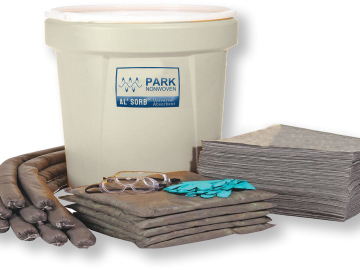
Widely used in spill response, oil absorbents materials or chemical absorbent materials are a game-changer in case of spills. Having said that it is important to employ the same with caution to minimise excessive use and products that are easy to retrieve, store and dispose. It must be used in the form of mats, booms, Chemical spill absorbing mat pads. Oil Absorbent material comprises a wide range of biodegradable, polypropylene Meltblown Oil Absorbent Pads designed particularly in form of Chemical spill absorbing mat pads or booms to recover oil and other chemical spills. Their composition and configuration are dependent upon the material used and their application in response. How do sorbents work? A Chemical spill absorbing mat pads to act as a sorbent must attract oil preferentially to water i.e. – it should be oleophilic and hydrophobic. Sorbent materials must act by adsorption or less commonly by absorption. Both adsorb material, as well as absorbents, incorporate the oil or other liquid to be recovered into the body of the material. Although good quality true absorbents are very few – such as Al’ SORB products from PARK Nonwoven. What are Oil Absorbent Pads made from? Needless to say, that Oil Absorbent Pads are made up of Meltblown. This Meltblown Oil Absorption material is high in absorption capacity. As many of these oils are also highly flammable so spills need to be addressed as soon as they occur. Most of the oil absorbent pads are made with polypropylene, a thermoplastic polymer. These are technical textile and repels water and are oleophilic. Most of the oleophilic substances of which these Meltblown Oil Absorbent Pads are made up of is a relatively new addition to the industrial toolkit. It is interesting to know that the market for these oil/chemical absorbent materials is growing quickly. Good quality oil-absorbent pads or mats or even boons are made up of several layers of polypropylene so that these can clear up large amounts of oil quickly, as these materials are hydrophobic in nature, the water is left behind. Applications of Oil / Chemical Absorbent Material: Oil absorbent material has several key applications in industrial settings as mentioned below. These are the uses of oil absorbent pads/mats, socks, and booms: Containing Spills at The Time of Spill as They Occur Many booms and pillows retain buoyancy, so they can absorb all oils and chemicals spill and discharges in pools of water and or oceans. Even where there is no water at the oil spills places, these oil specific Pad, oil absorbent material, meltblown oil absorbent pads can ease the clean-up and operations that keep a steady supply of oil-specific clean-up products to maintain safe, efficient workspaces. Choosing Oil Absorbent Pads/ lint-free wipes for Spill Response Choosing oil absorbent material and chemical absorbent material is tricky and buyers must do it carefully, the quality of the pads’ construction will determine its usefulness. AL’ SORB from PARK Group offers high-quality oil-absorbent products, chemical absorbent spill kits, chemical absorbent material, chemical spill absorbent mats pads, meltblown oil absorbent pads. Popular options for the industrial Oil Spill Response include: Buy oil absorbent/chemical absorbents from PARK Group to keep your business efficiently running, safe and begets high productivity. Contact us for bulk orders. If you are looking for high-quality Oil Absorbent Pads for industrial spill control, check our PP Oil & Chemical Absorbent Material here.
Huge Potential for Geo-Textiles – Significance of Jute Felts from PARK
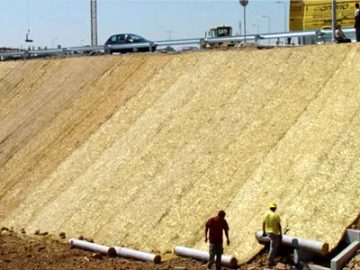
Geotextiles are primarily the permeable fabrics used in association with soil, increase the ability to filter, separate and reinforce, drain, or protect. To enhance the strengths and increase durability, needle punched staple fibre manufacturing technique is produced which increase survivability. There has been renewed focus on the use of natural fibres like Jute as a geotextile for underlaying the rural roads and for soil erosion control. India is one of the largest producers of natural fibres and their use in geotextiles has led to overall cost savings and good technical results. Geotextile could be a synthetic material such as Jute, Polyester, Polypropylene, and others, is also used with soil, rock and other geographical engineering-related material and is called geosynthetics. In the making of roads, in particular, these are used in high-standard all-season roads. Geotextiles extend the service like roads, increase their load-carrying capacity. These Geotextile products have a wide range of applications and are currently used to advantage in many civil engineering applications including roads, railroads, embankments, retaining, structures, reservoirs, canals, dams, bank protection, coastal engineering. Here are some of the primary uses of Geotextiles, namely: – Stabilization or Separation – Drainage – Soil Erosion Control – Reinforcement Soil erosion is one form of soil degradation and a naturally occurring process on all lands. Hilly, deserts and coastal regions are more prone to severe soil erosion making them severely vulnerable. In hilly areas, the phenomenon of natural slope, hilly and coastal regions are severely vulnerable to it. Since it is a relatively slow process that goes unnoticed and occurs at an alarming rate causing serious loss of topsoil followed by land sliding. There is a serious loss of lives, livestock and infrastructure, houses, markets and structures due to this vulnerable soil. This clearly shows that the economic consequences of erosion are also becoming severe. Data Statistics: Globally, there are economies that have formulated clear guidelines for the implementation the technical textiles in their usages in specific applications. Our Government is also in the process of firming up guidelines and standards and specifications to use geo-textiles products and projects where they are used. Also, state Governments and Governments across nations have their own concessions on several features to invite investment and entrepreneurs in this field. Natural Geotextiles Gaining Popularity Natural fibres such as jute and sisal are being in vogue into geotextile fibres in environmental protection projects. Jute is gaining immense popularity especially in Australia and other nations rather than the polymers in areas where their biodegradation is required while enabling seedling protection for hill slope protection. Geo-synthetics are gaining popularity across the world in the waste management industry as they offer isolation and protection [prevent leakage] to the surrounding soil substrate. It goes without saying that geotechnical textiles are poised to command a big domestic market as more and more methods are utilized to make it popular. Global Market Development The U.S. remains number one for geotextiles. Asia is comparable and followed by Europe and South America. In all these markets it is important to look at the specifics of demand in particular national areas, barriers and distribution. It is always important to pursue detailed market research covering markets now rather than in the past. THE EXPECTATIONS At present, the expectation is that the current markets will continue to grow, and new emerging trends will offer long term potential in addition to current markets. As for Jute Felt for geotextiles, there is a wide range of scope for use of existing products in road construction, golf courses, embankments, and other landscaping. Jute Felt from PARK is a fabric of matted, compressed jute Fibers and sometimes mixed with Fibers. Jute Felt extremely popular and rigorously being increasingly used as an industrial good, especially for insulation and Acoustic. These Jute felts are completely Bio-degradable and strong products and degrades without leaving harmful traces. The Jute felt absorbs moistures, upto 5 times of its own weight, which is useful for plantation, landscaping in dry periods.
PARK Group sharing insights into the immediate future of Filtration

2021 began with hope after last year’s COVID massacre, where customers and manufacturers were impacted globally. Many car manufacturers were shut for months, and dealerships were shut down entirely impacted OES business. PARK Group adjusted in working remotely and quickly were able to maintain supply delivery and levels of service. PARK Group demonstrate high-quality service delivery standards and social responsibility by providing material for medical and healthcare, filtration, and other verticals on time. We collaborated with numerous other businesses in this crisis and overcome the situation swiftly. Our products: Meltblown Filter media for healthcare, Spunbond filter media, Spunbond fabric, PP meltblown fabric for mask and respirators, activated carbon filter media, to air filter media and dustbag filter media reached high demand industry-wide, owing to its high-efficiency grades. Working for good at large We swiftly took action to investigate how our filtration technology could be additionally streamlined to give the most ideal protection against microorganisms. Working with a few renowned research companies, we had the option to freely affirm the high viability of our technology in catching and inactivating viruses and other contagions. This, fortunately, prompted an expanded trade with numerous global OEMs who were at that point mentioning enhanced filtration efficiency for their cabin air filters. So, even though we encountered a difficult first half of the year 2020, we wound up extremely lucrative growing new open doors in the top-notch filtration area. So, although, vehicle creation halted, interest for advancements flourished and our group dealt with those issues. The way ahead in 2021-22 While we have seen occasional interest in further developed filtration arrangements from car producers and OEMs previously, we are presently encountering a more prominent mindfulness towards the subjects of better air and further developed cabin air filtration as at no other time. The developing interest in “wellbeing and health” among our OEM clients arrived at new levels. Along with our clients, we need to make the advantages of cabin air filtration more apparent for end-buyers and furthermore spread it into any remaining spaces of portability. Makers of transports and other public transportation vehicles around the world, for example, have additionally currently expanded their advantage in discovering better answers for furnishing their travellers with cleaner air. By the by, there are yet monstrous difficulties in front of us that we might have the option to defeat together. Slowly getting back to business as usual Over the course of the following three years, we expect more with hardships in both OEM creation and how clients should respond as far as keeping up with the OES channel. Remote working and less driving will contrarily affect request levels. However, we likewise see expanded utilization of individual vehicles versus public transportation or utilization of ride-sharing services. Regardless of whether those patterns remain is obscure. Indeed, even urbanization, or potentially an inversion of it, will likewise assume a part in future transportation models. Despite the fact that it’s difficult to make an exact estimate, we don’t see vehicle creation getting back to 2019 levels before a couple of years, in spite of the fact that we expect the OES section to have generally balanced out before the finish of 2022. All things considered, the expanded spotlight on filtration and the need to augment its viability plays straightforwardly to our qualities. As the designer of the cabin air channel, we stay the market leader with regards to advancements dependent on demonstrated technology. PARK Nonwoven complete range of Automotive Filter Media: Speak to us! Together, we will continue to innovate and deliver you the best in the industry to cater world-class products to your customers to protect people and optimize processes all over the world.
What is the meltblown fabric that the world is looking for in 2022?
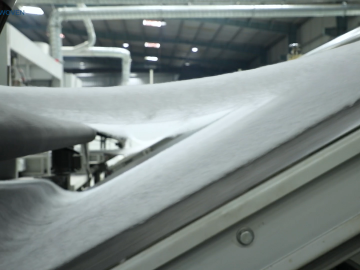
The ‘heart’ of N95 masks and the entire filtration and healthcare industry’s core instrument against this battle against the COVID pandemic is the Meltblown nonwoven fabric. Melt blown nonwovens are mostly composed of polypropylene, with fiber diameters ranging from 1 to 5 microns. There are a lot of voids, fluffy structures, and anti-wrinkle properties. The unique structure of melt blown fabric offers outstanding filtration, shielding, heat insulation, and oil absorption thanks to these ultra-fine fibres with a distinctive non-woven vascular microstructure that increases the quantity and surface area of fibers per unit area. Meltblown Non-woven fabric can be found in air, liquid filter materials, isolation materials, absorption materials, mask materials, thermal insulation materials, oil-absorbing materials, and wiping cloths, among other applications. Melt blown fabric production steps include polymer feeding, melt extrusion, fiber formation, fiber cooling, net formation, and textile strengthening. Scope of application Medical Nonwovens – Core component of Surgical/N95 Mask filter media The “heart” of medical surgical masks and N95 masks is meltblown fabric. Medical-surgical masks and N95 masks commonly use a multilayer construction known as the SMS structure, with single-layer spun-bond layers (S) on the inner and outer sides and a melt-blown layer (M) in the centre that can be separated into single or multiple layers. Flat masks are commonly made of PP spunbond+ meltblown+ PP spunbond, but one layer can be substituted with staple fibre to improve skin feel. PET polyester needle punched cotton + melt-blown + needle punched cotton or PP spun-bond nonwoven are used for three-dimensional cup masks. The outside layer is a waterproof nonwoven fabric that is primarily utilized to shield the droplets sprayed by the patient; The intermediate melt-blown layer is a specially processed melt-blown fabric with outstanding filtering, shielding, heat insulation, and oil absorption capabilities. The outer layer is made of standard nonwoven fabric, while the inner layer is made of melt blown fabric. Despite the fact that the mask’s spunbond (S) and meltblown (M) layers are non-woven fabrics and the raw materials are polypropylene, the production process is different. The inner and outer spunbond layer fibers are rather thick, around 20 microns; the middle melt blown layer fiber is barely 2 microns in diameter and is constructed of a polypropylene polymer called high-melt fat fiber. Nonwoven fabric is a new type of environmentally friendly fabric that has water repellence, breathability, flexibility, incombustibility, rich colours, and no stimulation. This substance has the shortest life lifetime of 90 days when placed outside; however, it takes 8 years when placed indoors due to natural decay. It does not contaminate the environment because it is non-toxic, tasteless, and leaves no residue. The benefits include not producing lint, being robust, durable, and silky soft, as well as being a type of reinforcement, feeling like cotton, and being less expensive than cotton. In the environment, the most commonly utilized raw materials are polypropylene non-woven fabric and polyethylene plastic bags. Despite the fact that both names are similar; however, the chemical structure is vastly different and makes an immense difference to the environment. Polyethylene’s chemical structure is quite stable, and it rarely decomposes in nature. A completely biodegradable plastic bag must take 300 years to degrade. Polypropylene has a weak chemical structure, and molecular chains can easily break, allowing it to decompose and pass into the next cycle in a harmless state. Within 90 days, a nonwoven shopping bag will degrade completely. Nonwoven shopping bags can also be reused more than ten times, with a contamination level of 10% of plastic bags. See the complete range of PARK Nonwoven’s Meltblown products or simply contact us to have a quick meeting with our professionals.
NEW Beginnings at IDEA 22 Miami and FILTECH 22 Events, more on innovation and sustainability!
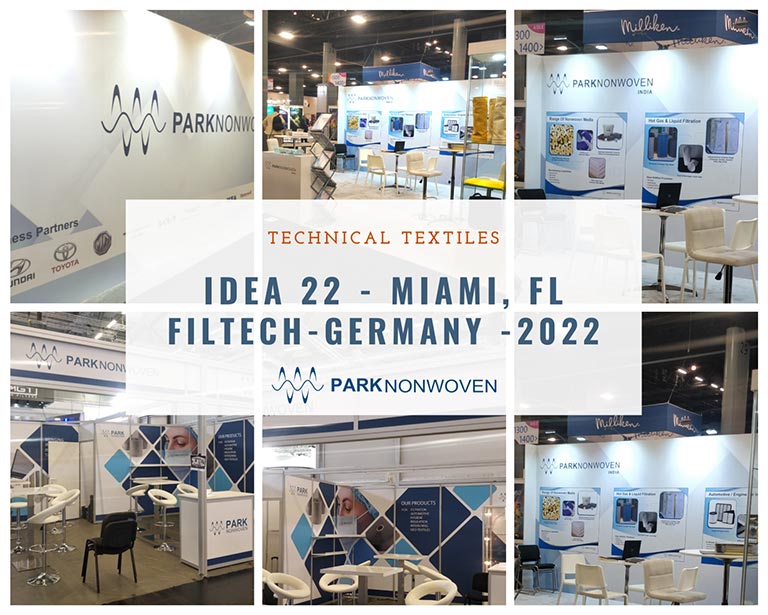
As this issue went to press, the global nonwovens industry was convening for the IDEA 2022 trade exhibition in Miami Beach, FL, North America’s largest nonwovens-related gathering. In the three years since the last IDEA Exhibition and Conference, the global nonwovens industry has seen an unprecedented rate of expansion with new line investments representing all types of nonwovens technology and impacting all the major world regions. So, is with PARK Group, we have been instrumental in supplying world-class innovative materials to global demands in the critical Pandemic situation along with domestic requirements. Some Glimpses from Global Events: The global rate of decline due to the Covid 19 Pandemic is approximately 3% [approximately], owing to the global economic downturn and lockdown efforts to control the outbreak. Similarly, in India, industry remained in a state of delayed production, particularly among automobile businesses (one of the major consumers affected by production downtime), which had a substantial impact on overall revenues. PARK Group, as one of the most reliable and well-known manufacturers of technical textiles and nonwovens, remained a major contributor to the worldwide textile market, meeting the majority of healthcare industry needs, particularly during the pandemic. Our meltblown respirator filter fabric production has increased by 200 percent in the previous 15 months, as has our production of activated carbon meltblown and other nonwovens in the medical and healthcare industry. Read the complete story here > https://www.parknonwoven.com/media/ While revenues from other sectors were impacted during the peak of the pandemic waves, increased demand for medical products such as PPE Kits, masks, and respirators has boosted production of a handful of our product lines contributing to the substantial growth. The focus on sustainability will begin to sharpen as this new capacity boots up and opens up new avenues for all types of innovative nonwovens. While this is seen on shop shelves with the rise of natural-based products and product lines, it is even more visible when looking at the nonwovens supply chain. Nonwovens suppliers, sellers, and users are always seeking for methods to make their product lines greener and reduce the environmental effect of their overall production processes. This year we look forward to attaining patented products to maintain the edge in the industry that are sustainable produced and help our customers on their green journey. Our story will be based on taking a unique path toward sustainability. These measures will undoubtedly assist to enhance the global nonwovens industry’s environmental imprint for future generations.
10 things to keep in mind about medical nonwoven fabrics

Medical non-woven fabrics, as the ultimate packaging materials for sterilised medical products, and for significant medical applications such as body coveralls, sheets, caps, covers, face masks filter media and more. These medical nonwovens have undergone continual update and innovation owing to the swift development and supply need. The reasons are its sustainability, durability, and range of purposes. Medical nonwoven fabrics have effectively entered the disinfection supply. Manufacturers are further supplying to various hospitals and pharmacies, making it one of the most critical parts of the medical supplies of the healthcare and hygiene industry. You must pay attention to these ten features of medical nonwoven fabrics in order to monitor their quality.